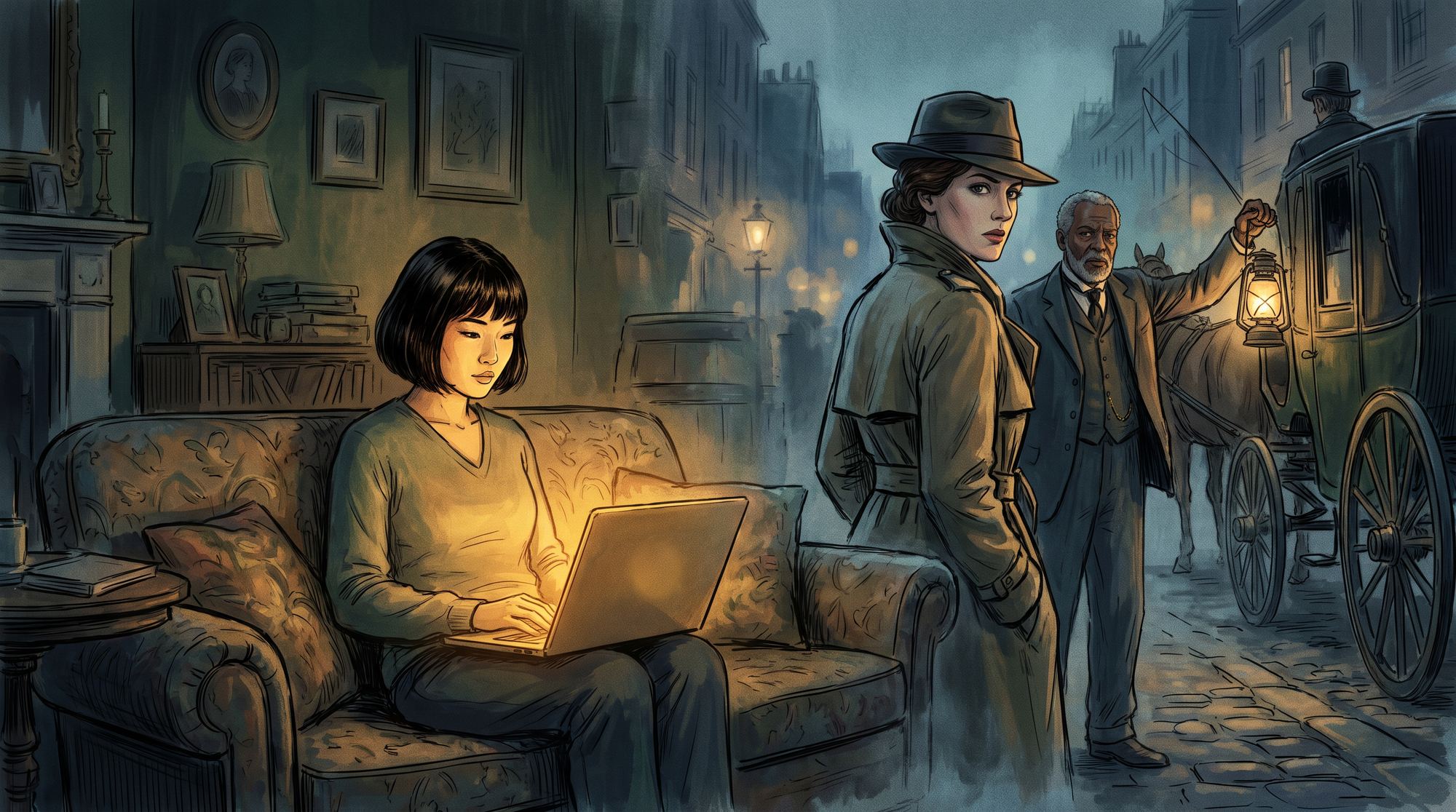
Every new entertainment medium spends its first years being described as a version of an older one. Early films were called "photoplays", recorded theatre. Early radio drama was theatre without the pictures. Video games were, for a while, "television games", something you plugged into the set the family already owned. In each case it took years before people stopped measuring the new thing against the old one and saw it for what it was.
Interactive stories generated by AI are at that stage now. They are usually described as a feature of video games ("AI NPCs"), or as a kind of chatbot ("talk to a character"). We think both descriptions are wrong, and that getting this right matters for the people who will build the field. This is our case for treating Story Generators as a second, evolutionary, stand-alone pillar of interactive entertainment rather than a new genre: separate from classical video games, with their own craft, their own rules and their own history still to be written.
Two pillars
For fifty years, interactive entertainment has effectively meant one thing: the video game. It has many genres, from puzzles to open worlds to competitive shooters, but they share a foundation. Someone builds a system of rules and content in advance, and the player explores what was built.
Story Generators work on a different foundation. Someone writes a world and its people in advance, and a model performs that world for each player, live, in language. The difference is not one of genre. It is a difference in what the work is made of, how it is authored, and what the player is actually doing. That is why we call it a second, evolutionary, stand-alone pillar of interactive entertainment rather than a new genre. It evolved from what came before, as games evolved from film, television and the tabletop, but it stands on its own.
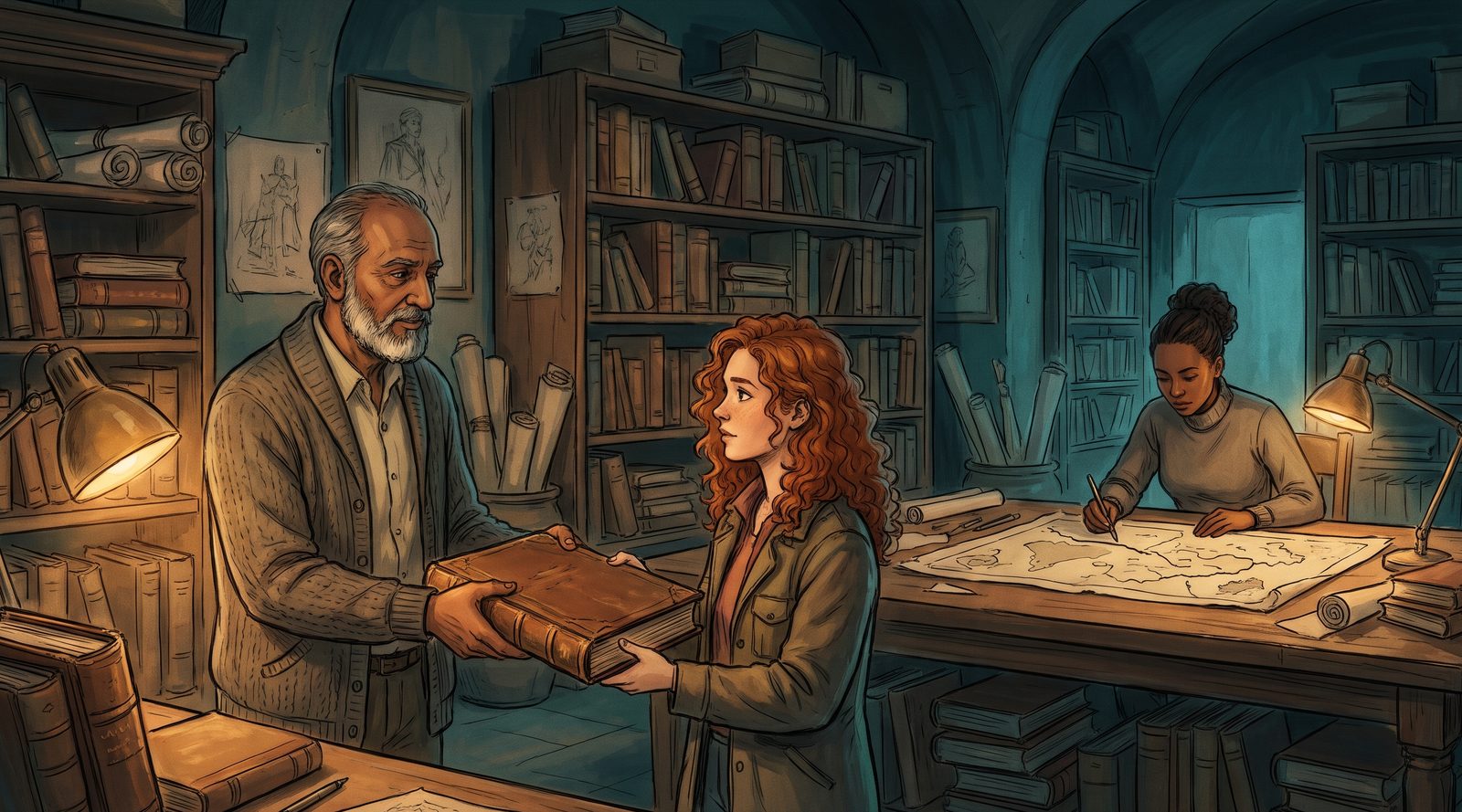
Defining - Video Games
By classical video games we mean interactive works in which the experience is assembled from content and rules that were authored, or procedurally specified, before the player arrives. The game is a machine built in advance. The player's freedom is the freedom to move through it.
That definition covers almost everything ever sold as a game: from the text adventures of the 1970s to today's largest open worlds. A classical game may be enormous, emergent and surprising. It may use procedural generation to lay out levels or scatter loot. But its story, where it has one, is written, and its characters say lines that a writer wrote, chosen by a branching structure that a designer built. When a character in a classical game has nothing scripted for what you just did, they fall silent, or repeat themselves.
None of that is a weakness. Authored structure is why the best games feel deliberate. It is the craft of fifty years, and it is not going away.
Defining - Story Generators
A Story Generator is an interactive work in which an AI model generates the story and/or the character dialogue live, in response to the player's choices, while staying bound to a canon written by a studio or an author.
Each part of that definition does work:
- The story and/or the dialogue is generated. Not looked up, not branched to, not assembled from barks. Written at the moment it is needed, for this player, from what has happened so far.
- It is live and responsive. The player's words and choices are the input. There is no list of options the writer anticipated; the player can say what they like.
- It always includes player choice. The player decides what happens next: which way the next chapter goes in a story, or what their character does and says in an RPG. A model writing on its own while you read is not a Story Generator.
- It is bound to canon. The world, its history, its characters, their voices and the shape of the story are authored by people, and the model's job is to perform them faithfully. Canon is not decoration. It is what makes the result a work rather than an improvisation.
A classical game is a machine you explore. A Story Generator is a world that performs itself for you, from a script that keeps rewriting its lines but never its truths.
| Classical video games | Story Generators | |
|---|---|---|
| What the work is made of | Rules, code, assets and scripted content | A canon (world, story, characters) plus a model that performs it |
| Where the story comes from | Written in advance and branched | Generated live, within authored limits |
| Live or packaged | Either: live through multiplayer and services, or pre-packaged content | Always live: generated in the moment for each player and reader |
| Player choice | From options and verbs prepared in advance | Always: the next chapter, or what your character says and does |
| How the player acts | Through verbs the designer provides | Through language: anything they can say |
| What makes each playthrough different | Player skill, branching and systemic play | The story itself is different for every player |
| The author's main tool | Engine, level editor, dialogue tree | Story bible, character sheets, canon tools |
| Where AI fits | Production tool (code, assets, some NPC lines) | The medium itself |
Why the name: Story Generator
"Video game" named a medium after its screen and the thing you do with it. "Story Generator" does the same job for this one: it names what the work is, a story, and what makes it new, that the story is generated live while you play. The obvious alternatives each name something else.
- Game generator sounds like a tool that makes classical games, an engine or a level builder. That is exactly the confusion between a new medium and AI in games, and it leaves out the reader who wants a story rather than a challenge. It is also too narrow. Omni models already take in and give back text, audio and video, and the generative universes being built on them will not be fixed to one format. A story that is a chat today, a voiced drama tomorrow and a walkable world next year is not a game that changes shape. It is a story that every format can carry.
- Film generator ties the medium to video, which arrives only at the later stages. Today Story Generators are text and illustrated, with voice next; the name would be wrong for most of the medium's present, and it suggests something fixed that you watch rather than something you steer.
- Book generator ties it to text and to a finished object, and sounds like a tool for producing books to publish rather than an experience to play.
"Story" is the part that survives every stage, from text and pictures to voice, film and 3D worlds. It covers both kinds, story and RPG, and it points to the canon, which is the contract. "Generator" describes what happens while you play, not how the work was made, and that is what separates the medium from AI in film and AI in games. The word "generator" can sound mechanical; the medium's answer to that is authorship. A Story Generator is only as good as the canon a writer gives it.
It is also deliberately an umbrella term. "Story Generator" covers every kind of interactive story performed by AI, whatever form it takes. That breadth matters because AI is pulling storytelling towards transmedia in a single experience. Until now a story crossed media by fragmenting: the novel, then the film, then the game, each made by a different team, each a separate thing to buy, each drifting a little further from the original. A Story Generator can hold the text, the pictures, the voices and, in time, the film and the world in one place, all performed from the same canon. One experience across many media, rather than one story scattered across many products.
Games inside, games around, and always live
The line between the two pillars is not a line between games and stories. A Story Generator can contain games: a puzzle to solve, a chase to survive, a hand of cards to win. It can also be wrapped inside a game, with a generated story running at the heart of a world that has maps, missions and mechanics of its own. Depending on the experience, the generation happens within the game, or it is the game.
Story Generators also share something important with classical video games: neither has a set format. A video game can be anything from a falling-block puzzle to a sprawling simulation of a city, and games keep inventing new rules and new kinds of experience. Story Generators can do the same. That freedom is not what separates them.
What makes them different is live generation. Every Story Generator is a live game. A classical game can be live, through multiplayer or a service that keeps adding content, but it can equally be pre-packaged: everything the player will see already exists on the disc or in the download. A Story Generator can never be pre-packaged. The narrative and the dialogue are generated in the moment, so for the player and the reader it is always a live experience, and no two people ever receive the same one.
Player choice is not optional
Every Story Generator puts a decision in the player's hands. That is the difference between being told a story and being part of one. A model that writes a novel while you watch is a remarkable tool, but it is not interactive entertainment. The moment the player's choice shapes what is generated next, it is.
The form that choice takes depends on the kind of Story Generator:
- In a story, the player chooses the direction of the next chapter: who to follow, what to risk, which door to open, what a scene should turn on. The model then writes that chapter, faithful to the canon and to every choice made before.
- In an RPG, the player chooses as a character: what they do, what they say, who they trust. The model narrates what happens, the other characters respond in their own voices, and the story bends around the player's character.
In both cases the choice is real. It is not a pick from three options a writer prepared earlier, because the next chapter or the next reply did not exist until the player made it.
Canon is the contract
If there is one rule that separates a Story Generator from a model improvising fiction, it is this: a Story Generator must contain a studio or author canon. Story data, character data, or both.
By canon we mean the material a model cannot overrule:
- World: places, history, rules, technology, what is possible and what is not.
- Story: the premise, the secrets, the turning points that must land, the endings that are allowed.
- Characters: who they are, what they want, what they know and do not know, how they speak, what they would never say.
- Tone: what kind of story this is, and what it is not.
Canon does three jobs at once. It gives the player something real to push against: a secret that stays secret until it is earned, a character who refuses you because that is who she is. It gives the model a standard to be checked against, so that a character alive on Monday is not dead on Thursday. And it gives the work an author. As we argued in Who writes the story?, the writer's canon is what keeps authorship with people, even when every performance is new.
This is also why a general-purpose chat app, however fluent, is not a Story Generator. It has no world to be faithful to. Ask it for a dragon and you get a dragon; ask again and you get a different one. Nothing in that exchange is at stake, because nothing was ever fixed.
Read on
- Story, RPG and what a Story Generator is notThe two kinds of generative play, how they differ from Story Writers, and why AI films and AI games are not the new medium.
- A field at its 1970s momentBefore video games were an industry, a handful of teams typed caves into being. Story Generators are at that point now.
- The market today, beyond generic mobile appsA third layer is arriving on every device, beside classical apps and the web. Story Generators live in it.
- Where it goes: from text to generative universesText and illustrated stories now, voice next, then film, generative VR and, at the furthest point, generative universes.
- The manifesto: ten principlesThe principles we hold ourselves to, and the ones we think the field should hold to as it grows. Followed by the questions we hear most.