Story Generators
The rise of generative universes
Calling the next medium a 'game generator' fixes it to one format just as AI is breaking formats apart. Omni models and generative universes point to something broader: the Story Generator.
New media rarely get the right name straight away. In the early 1970s the things people played on screens were called TV games, computer games, electronic games and coin-op amusements, depending on who was selling them. By the end of the decade one phrase had won: video games. It stuck because it named the experience rather than the machinery, and that gave an industry something to point at.
AI entertainment is at that moment now. The phrase most often reached for is game generator: a model that makes games. We think it is the wrong name, and the reason it is wrong says a lot about where this medium is going.
Why “game generator” is too narrow
A game generator sounds like a tool for making classical games faster: an engine that builds levels, a model that writes quests, a pipeline that fills a map with assets. That is real and useful, but it is AI in games, a better way of making an existing kind of thing. It is not a new kind of thing.
The bigger problem is the word game itself. It fixes the medium to one format at exactly the moment AI is pulling formats apart. The models now arriving do not stay in one lane. They write, they speak, they draw, they animate, and increasingly they do all of it at once. A name that assumes the result will be a game assumes the one thing that is no longer safe to assume.
Omni models change what a “format” is
For most of the history of entertainment, a format was a production decision. You chose to make a novel, a film or a game, and that choice decided the team, the budget, the tools and the audience. Changing format meant starting again.
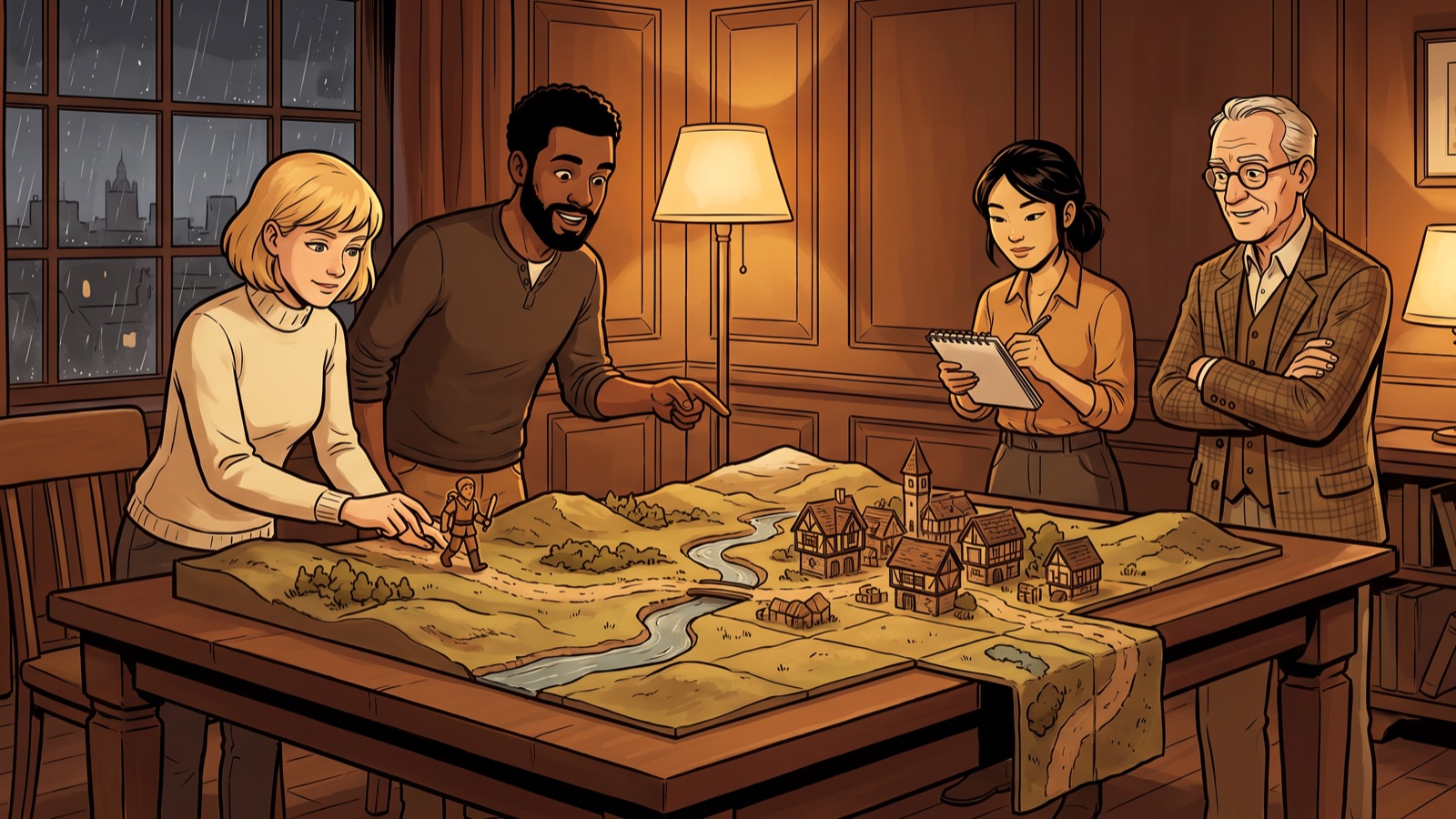
Omni models undo that. A single model that takes in text, audio and video and gives back text, audio and video, coherently, from one understanding of a scene, does not care much which format you started in. The same character can be written in one moment, voiced in the next and shown on screen after that, and still be the same person, because one mind is performing her throughout.
That turns format from a production decision into a playback decision. The story is the stable thing. Text, voice, film and world become ways of experiencing it, closer to settings than to separate products.
Transmedia without the fragments
We have had transmedia for decades. A popular story becomes a novel, then a film, then a game, then a series. But each version is made by a different team, sold separately and allowed to drift. Characters are recast, timelines contradict each other, and the reader who loved the book finds a different person on screen. Transmedia so far has meant fragmentation: one story scattered across many products.
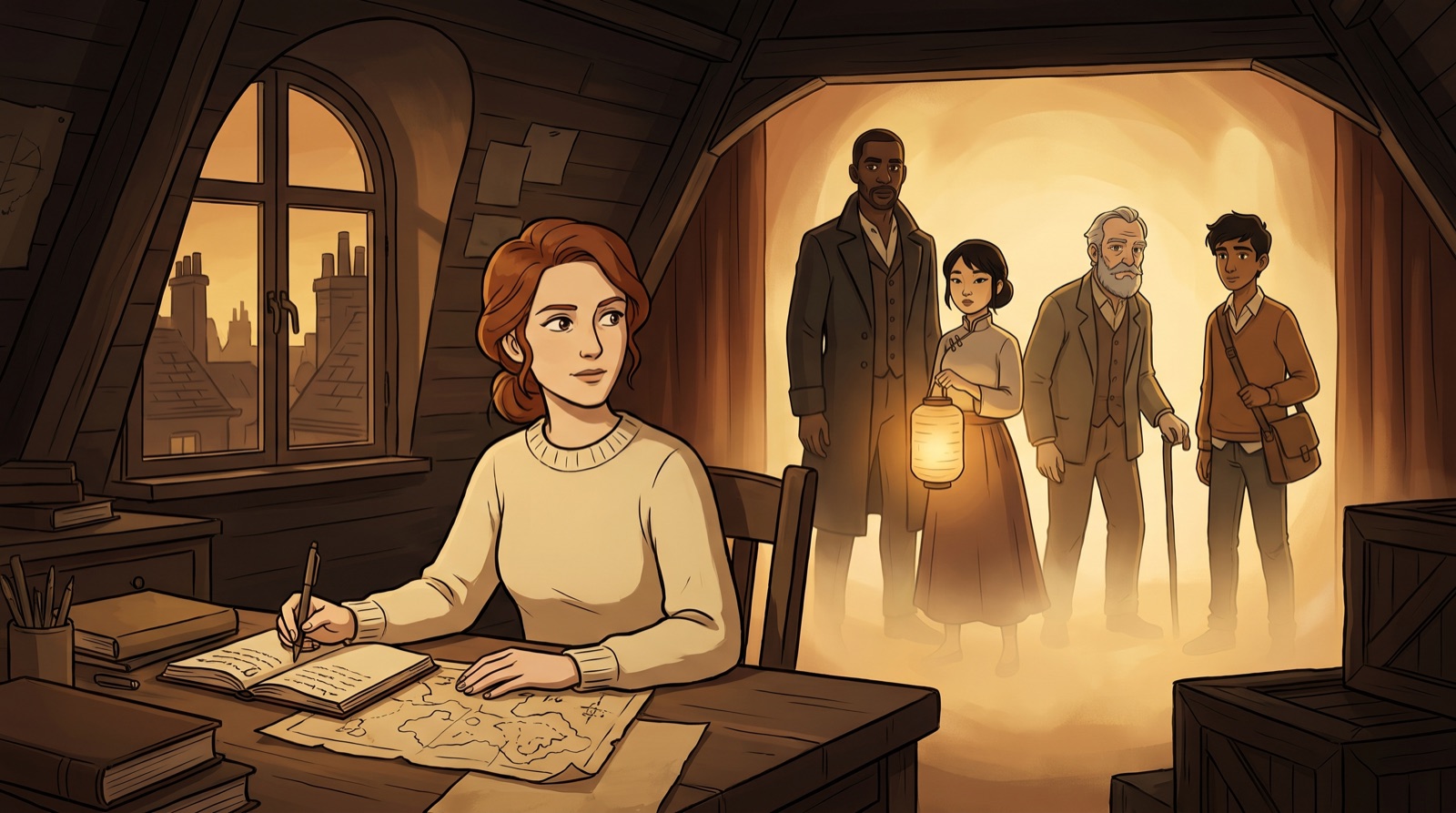
Generative media makes the opposite possible. One canon, written by people, can be performed in every format from a single source of truth. The world, its history and its characters stay fixed; what changes is how you meet them. You might read a chapter on the train, talk to a character on the walk home and step into the scene that evening. One experience across many media, rather than one story spread thin.
What a generative universe is
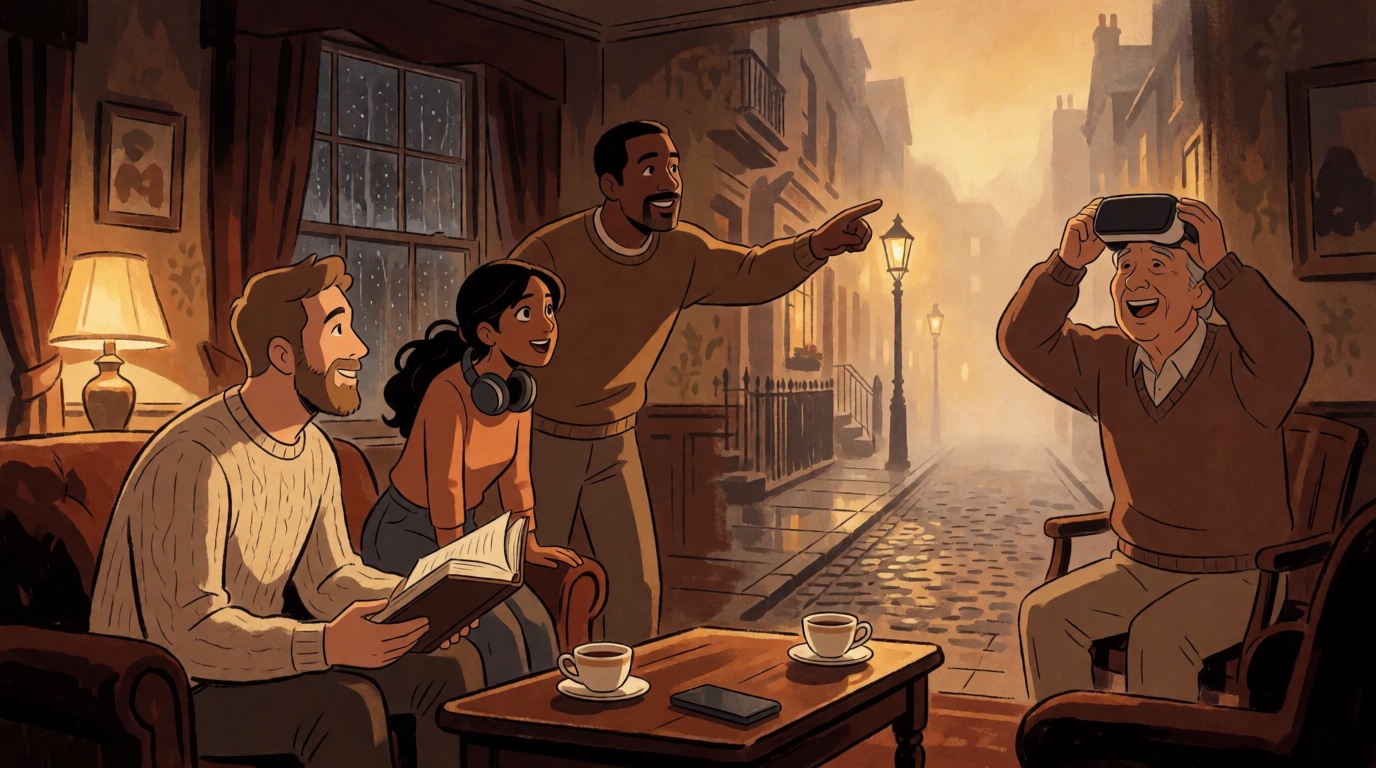
Push that far enough and you arrive at generative universes. A generative universe is an infinite, omni, narrative universe: transmedia by nature, directed by human writers through canon, and enjoyed by people who come to it in place of a shelf of books, a stack of TV series and a library of games. Instead of one show, there are many running in the same world. Instead of a franchise split across products, there is one place where the fiction lives, consumed on a phone on the commute and in immersive VR at home, and so epic and so dynamic that it can stand in for traditional media altogether.
A classical game world ends where the studio stopped building. A generative universe keeps going, because the next street, the next conversation and the next episode are generated as you reach them, bound to what the writers established.
A subculture first
For now, this is a niche. The people who live in generative universes are a subculture, as early gamers were: a small, devoted audience who would rather follow a story that answers them than one that does not. Gamers took their name from what they played. This audience may well take theirs from what they play too, and simply call themselves generators.
Niches like this do not stay small. Video games began as a pastime for hobbyists with home computers and arcade tokens, and grew past film and music combined. We think generative universes can grow past gaming itself, for one reason games do not have: a live feedback loop between canon and the audience. Writers set the world and its rules; players show, instantly and in their millions, which way they want the story to go; the next scene is generated in response. No studio release schedule can move that fast.
Anywhere, within guardrails
In a generative universe the story can go anywhere. That is its power, and also its risk. Left to drift, a story can slide too dark, into cruelty that serves nobody, or too light, into a frictionless comfort where nothing is at stake and nothing matters. Both kill fiction.
So generative universes need guardrails, and they belong in the canon. Writers decide the tone a world can hold, the lines it will not cross and the weight it must keep. The audience steers; the canon keeps the story worth steering. That balance, freedom with direction, is what separates a universe from an improvisation.
None of that is a game in the narrow sense, though it can contain games, and it can sit inside one. Some of it will be read, some heard, some watched and some walked through. What ties it together is not the format. It is the story.
Why we say Story Generator
That is why we use the term Story Generator, and why we set out the case at length in our manifesto, Story Generators: a new pillar of interactive entertainment. “Story” names the thing that survives every format change. “Generator” names what happens while you play: the story is performed live, for you, in response to what you do. Whether the output is a page, a voice, a film or a world is a matter of which stage of the medium you are in.
It is also worth being clear about what a Story Generator is not. It is not a Story Writer, a creative tool where you and an AI take turns writing the prose. That is a valuable thing, but it is a tool for making stories. A Story Generator is a medium for playing them: the canon is authored for you and the AI performs it, while you choose and act. Keeping the two apart matters for the same reason “video game” had to become distinct from “computer program”.
The name is a bet on the future
Names shape what gets built. Call the medium a game generator and you will measure it against games and build it like games, with fixed formats, fixed scopes and a fixed end. Call it a Story Generator and the format is free to move as the models do: from text and illustration today, through voice and interactive film, to worlds you can walk through.
Video games were named after a screen and outgrew it within a decade. We would rather name this medium after the part that will not change.